The Price of Glory
"If I wanted an easy job, I would have stayed at Porto."
— José Mourinho on his move to Chelsea, summer of 2004
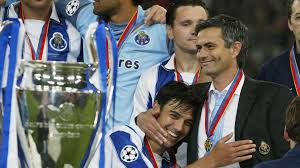
F.C. Barcelona spent a reported €20 million on Deco in the summer of 2004, shortly after Porto won the Champions League. The previous summer, Porto paid a mere €10 million to help build a Champions League-winning side. How did Porto win the most coveted trophy in club football with a fraction of the financial resources compared to giants like Real Madrid and Manchester United? Porto were crowned champions of Europe not despite their financial limitations, but because of how they managed to work within them; however, as soon as they did, the cruel market and financial structure of football took everything they had built.
Mourinho's first full season in charge, 2002/2003, allowed him to build a financial foundation that catalyzed the historic following season. Key players such as Vítor Baía, Ricardo Carvalho, Costinha, Deco, Dmitri Alenichev, and Jorge Costa were already at the club before Mourinho arrived in early 2002, for minimal return loan fees, low transfer fees, or as academy products. In the summer of 2002, Mourinho spent a mere €9 million while bringing in €18.2 million in return, giving the club a comfortable €9.2 million in profit that summer while bringing in key players like Nuno Valente, Paulo Ferreira, and Derlei — two Portuguese fullbacks who completed Mourinho's rock-solid defence and a formidable Brazilian striker — for a combined total of around €3 million.
This profitable window ensured a low-risk season that had great returns. Despite low spending, Porto won a treble: the Portuguese league title, the UEFA Cup, and the Taça de Portugal. Mourinho's first full season proved to be a success and catalyzed his historic Champions League run the following season. Porto's treble exemplified how this financial model could win major trophies despite limited capital.
By the time of Mourinho's legendary upset over Manchester United in the Champions League round of 16 the following year, the financial model had proved successful against the biggest and wealthiest team at the time. When remembering the historic night with FourFourTwo, Mourinho describes the shame Sir Alex Ferguson and the rest of the club must have felt being beaten "by an opponent on a tenth of the budget." Although Mourinho's comment seems quite arrogant at first glance, he is merely explaining the financial miracle that occurred that night at Old Trafford.
The Road to Gelsenkirchen
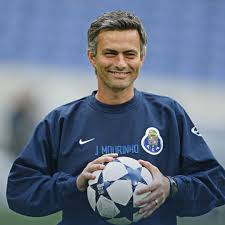
The road to Gelsenkirchen for Porto proved eventful. In the group stage, Porto was placed with Real Madrid, Marseille, and Partizan. Porto's frugal financial model proved successful once again, as they qualified comfortably in 2nd place, only three points behind Real Madrid, and managed to draw with them.
As previously mentioned, Porto faced the English giants Manchester United. In the first leg, Porto pulled off a 2-1 victory at the Estádio do Dragão and then dramatically clinched a spot in the quarter-finals through a Costinha last-minute equaliser in a 1-1 draw at Old Trafford. In the following rounds, Porto played Lyon in the quarter-finals, then Deportivo La Coruña in the semi-finals — a fellow Iberian club punching above their weight, who had beaten Juventus and AC Milan to get there.
One extra advantage of Porto's and smaller European teams' financial strategies that allows them to compete on the biggest stage is the lack of pressure compared to bigger clubs, which spend 10x as much in a transfer window. Edgaras Jankauskas, Porto's backup striker, put it best when revealing to Goal.com that after the first leg against United, "the pressure was on them: they expected to go all the way to the final and to lose would be a disaster for such an iconic organization."
The added pressure on wealthier clubs to perform and win trophies proved an advantage, allowing Porto to reach and win the final 3-0 against Monaco on that magical night in Gelsenkirchen.
The Market Takes Everything Back
Porto's economic policy proved successful, as the club generated close to €30 million across the group stage, knockout stages, and final. Despite the profits, the harsh reality of the footballing market was soon going to sweep away everything Porto and Mourinho had built.
Mourinho and several of his key players would depart that summer, shortly after the historic win. According to Goal, Mourinho admitted "that night in Gelsenkirchen that he was bound for England, where he would break a plethora of records with a formidable Chelsea team." On June 2, 2004 — seven days after the final whistle — he was presented at Stamford Bridge.
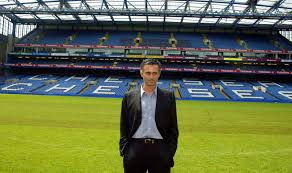
Chelsea paid compensation for the remaining two years of his Porto contract just to bring him, showing the often impulsiveness and lack of frugality of these bigger clubs. Deco, who was named Most Valuable Player at the European Football Awards in Monaco that summer, followed suit by joining Barcelona for €21 million. Ricardo Carvalho and Paulo Ferreira joined Mourinho at Chelsea for €30 million and €20 million respectively.
In the 04/05 season, Porto would generate €98.75 million in transfer-fee profit by spending only around €45.1 million, resulting in €56.65 million in net profit. To put that into perspective, in the 03/04 season Porto had only spent €8.5 million while bringing in €10 million. The model had succeeded, and the market had taken everything it produced.
Like Porto, many other smaller European clubs — Ajax, Benfica, Sporting — use this model to produce homegrown talent, find hidden gems in lower leagues, develop them, and sell them to wealthier sides for 10x what they spent. Mourinho's Champions League-winning side is the epitome of this model and of how these "smaller clubs" have been able to compete in European competitions since their founding. They have learned to adapt and find their place in the economic system of football.
Despite how honorable this model is, it is still quite frustrating to see teams like Porto in 03/04 or Ajax in 18/19 make historic runs in the Champions League and be forced to sell 90% of their squad because of the publicity the players or managers get in European competitions. Mourinho, in an interview with Adidas, mentioned that winning the Champions League was good for them personally but not for the club, because the football market took away from them — before adding that the 03/04 team "would have kept making history if they'd stuck together."
Mourinho's statement reveals the harsh reality of the football market that keeps these smaller sides from ever competing with the bigger giants. Because even if they somehow swindle their way into the latter stages of a major competition, they lose their entire squad the following season and have to start all over again.
Porto won the Champions League. But they lost their stars and their manager.
Sources: UEFA, Transfermarkt, FourFourTwo, Goal.com, Adidas Group, Deloitte Annual Review of Football Finance.